The Growing Need for Cloud Migration
Technology is evolving at a pace where traditional IT systems often struggle to keep up. As customer expectations grow and digital operations become more complex, businesses are increasingly turning to cloud migration to modernize their infrastructure. Moving to the cloud is no longer just about cutting costs; it’s about creating a flexible foundation that supports growth, innovation, and resilience.
Organizations of all sizes are rethinking how they store data, run applications, and scale operations. Cloud migration enables businesses to move away from rigid, hardware-dependent systems and adopt a more agile, future-ready approach to technology.
What Is Cloud Migration?
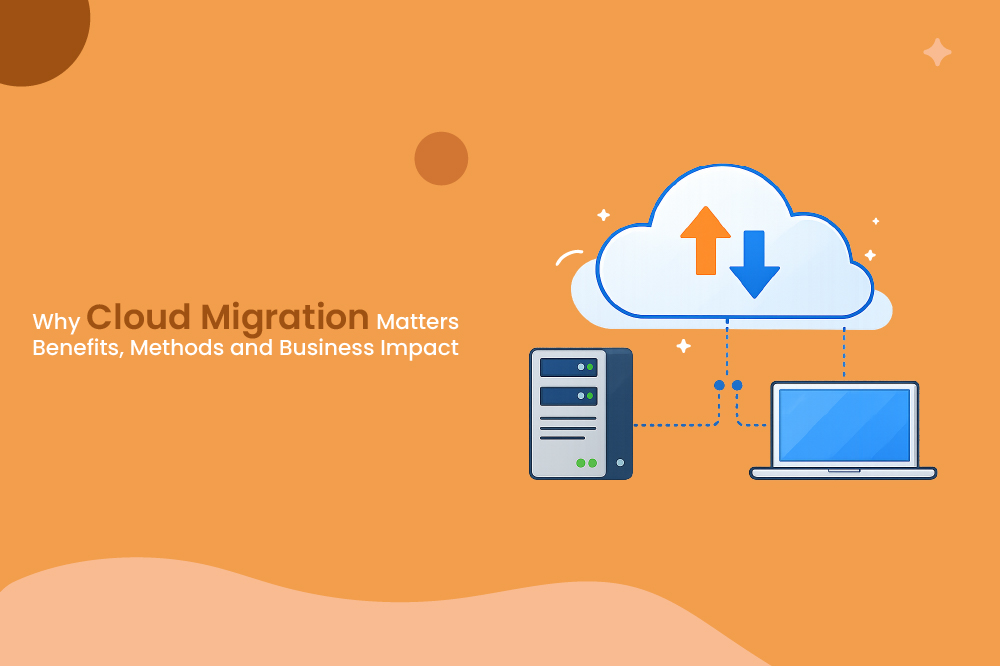
Cloud migration refers to the shift of business data, applications, and digital workloads from traditional on-premises infrastructure or outdated systems to cloud-based platforms. In some situations, it can also mean relocating workloads between different cloud environments to improve performance, scalability, or cost efficiency.
Businesses usually move to public, private, or hybrid cloud models supported by platforms like Amazon Web Services, Google Cloud, and Microsoft Azure. The objective is to move away from hardware-heavy setups and leverage cloud-driven advantages such as on-demand scaling, automated operations, and worldwide infrastructure reach.
Why Cloud Migration Has Become a Business Priority
Cloud adoption is accelerating because it directly supports modern business goals. Companies today must scale quickly, launch updates frequently, and maintain high availability across regions. On-premises infrastructure often lacks the flexibility to meet these demands.
Cloud environments allow teams to experiment, deploy, and optimize without long procurement cycles. They also support distributed teams and remote operations, making them well-suited for today’s workforce models.
Major Benefits of Cloud Migration
1. On-demand scalability
Cloud infrastructure allows businesses to adjust resources in real time. Whether traffic increases unexpectedly or workloads fluctuate seasonally, cloud platforms scale automatically, without the need for manual hardware upgrades.
2. Better cost control
By migrating to the cloud, organizations avoid large upfront investments in servers and maintenance. Instead, they pay for what they use. This usage-based pricing model helps reduce waste and improve budget predictability.
3. Increased reliability and availability
Cloud providers operate across multiple regions with built-in redundancy. This minimizes downtime and ensures services remain accessible even during infrastructure failures or outages.
4. Advanced security capabilities
Security is a major driver of cloud migration. Cloud platforms offer features such as data encryption, access controls, threat detection, and compliance certifications. When managed properly, cloud security can exceed traditional on-premises standards.
5. Faster time to market
Cloud-native environments support automation and rapid deployment. Development teams can release updates faster, test new ideas quickly, and respond to user feedback.
Challenges Businesses Face During Cloud Migration
While cloud migration offers clear advantages, it also presents obstacles that must be addressed early.
1. Data protection and compliance
Transferring sensitive data requires strict governance. Businesses must ensure regulatory requirements are met, and data remains secure throughout the migration process.
2. Service interruptions
Without careful planning, migration activities can lead to downtime or degraded performance. This is particularly risky for customer-facing applications.
2. Service interruptions
Without careful planning, migration activities can lead to downtime or degraded performance. This is particularly risky for customer-facing applications.
3. Unexpected costs
Cloud spending can increase if resources are not monitored closely. Idle services, inefficient configurations, and data transfer charges can quickly add up.
4. Legacy system constraints
Older applications are often not designed for cloud environments. Some require refactoring or replacement to function efficiently in the cloud.
5. Organizational readiness
Cloud migration impacts workflows, tools, and responsibilities. Teams may need training and process changes to adapt successfully.
Common Cloud Migration Approaches
There is no one-size-fits-all migration strategy. Organizations typically choose an approach based on application complexity and long-term goals.
- Rehosting: Quickly moving applications with minimal changes.
- Replatforming: Making minor improvements during migration.
- Refactoring: Redesigning applications to fully utilize cloud features.
- Replacing: Switching to cloud-based software solutions.
- Rebuilding: Developing new applications designed specifically for the cloud.
Each approach balances speed, cost, and optimization differently.
Best Practices for a Smooth Cloud Migration
1. Define clear objectives
Establish what success looks like, whether it’s cost savings, performance improvements, or faster deployments.
2. Start small and scale gradually
Begin with less critical workloads to test processes and reduce risk before migrating core systems.
3. Embed security from day one
Security should be part of the migration plan, not an afterthought. Implement access controls, encryption, and compliance checks early.
4. Upskill teams or partner with experts
Cloud expertise is essential. Training internal teams or working with experienced partners helps avoid costly mistakes.
5. Continuously optimize
Migration is not the final step. Ongoing monitoring and optimization ensure performance remains high and costs stay under control.
Conclusion
Cloud migration is a strategic move that enables businesses to operate with greater flexibility, resilience, and speed. When executed with a clear plan and the right approach, it transforms IT infrastructure into a growth enabler rather than a limitation. By understanding the benefits, preparing for challenges, and following proven best practices, organizations can confidently transition to the cloud and position themselves for long-term success