Building long-term client relationships doesn’t end when a project is delivered. In many ways, that moment is where the real work begins.
After a website launch, migration, or customization is complete, it’s common to ask:
What comes next?
The answer lies in how thoughtfully client relationships are nurtured beyond execution. Long-term success is rarely the result of isolated projects. Instead, it comes from consistent collaboration, shared understanding, and a genuine investment in a client’s growth.
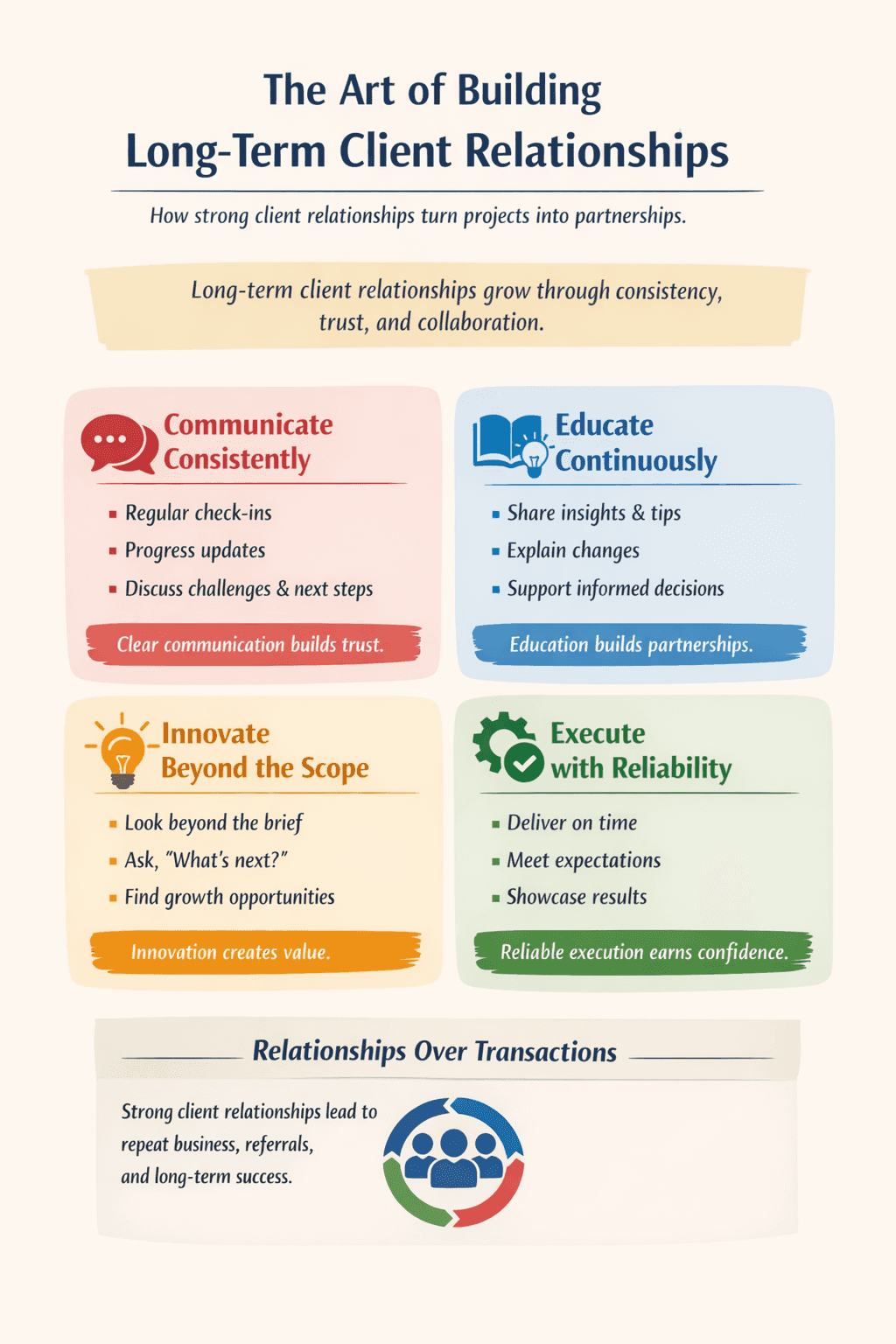
Key pillars of building long-term client relationships through consistency and collaboration
The Foundations of Strong Client Relationships
Successful long-term client relationships are built on multiple elements working together. When these elements are aligned, partnerships feel less transactional and more collaborative. Four principles consistently shape relationships that last: communication, education, innovation, and execution.
Communicate consistently
Communication sits at the core of healthy client relationships.
Regular conversations, clear updates, and honest discussions help set expectations and reduce uncertainty. When communication remains open throughout every phase of work, trust develops naturally.
Effective communication includes:
- Scheduled check-ins through calls or virtual meetings.
- Ongoing updates during active work.
- Clear explanations of progress, challenges, and next steps.
Over time, consistent communication becomes a defining trait of long-term client relationships.
Educate continuously
Staying informed about industry trends, best practices, and evolving tools allows meaningful insights to be passed on. When clients are better informed, decisions improve-and the relationship grows beyond task-based interactions.
Ways education adds value:
- Sharing relevant articles, resources, or insights.
- Explaining how changes impact business goals.
- Offering perspective that supports long-term planning.
This exchange of knowledge turns short-term engagements into long-term client relationships built on trust.
Innovate beyond the initial scope
Innovation is often what separates routine work from enduring client relationships.
Looking beyond the original brief and identifying new opportunities shows commitment to progress. Asking reflective questions such as “What are we not doing yet?” can open conversations that lead to meaningful improvements.
Innovation encourages:
- Ongoing improvement.
- Deeper collaboration.
- Stronger alignment over time.
These conversations naturally reinforce long-term client relationships.
Execute with reliability
Ideas only gain value through consistent execution.
Meeting expectations, delivering on time, and clearly communicating results build confidence. When execution is dependable, client relationships shift from cautious trust to long-term confidence.
Strong execution involves:
- Delivering work as promised.
- Sharing outcomes through clear summaries or visuals.
- Explaining results rather than leaving them open to interpretation.
Reliability remains a cornerstone of long-term client relationships.
Relationships Over Transactions
Sustainable growth comes from prioritizing client relationships over individual projects.
When communication remains clear, education is ongoing, innovation is encouraged, and execution is reliable, long-term client relationships develop naturally. These relationships lead to repeat collaboration, referrals, and partnerships grounded in mutual respect.
In the end, strong relationships aren’t built through transactions they’re built through consistency, trust, and long-term thinking.