What Makes Customers Choose You
People often buy countless products every day. As a result, businesses have gradually emerged and expanded globally, leading to intense competition in nearly every industry. However, despite the market overflowing with options, customers don't buy from every company. They choose specific brands. So, what makes a customer pick one product over another? It's no longer merely about price or quality.
Think about this: You're at the supermarket, staring at a shelf full of shampoos. The quality and prices are similar; they all promise the same results: clean hair. But your hand reaches for Dove. Why?
That's branding. More than the price and quality of the product, it creates emotional value. Maybe you’ve seen their campaigns. The white packaging feels gentle, even before you open it
It’s not just about a logo or color. It’s not just a promise; it’s a reputation. A brand results from a customer’s gut feeling about a product, service, or company. It lives in their heads and stays in their hearts.
Branding
Branding is the process of creating a unique identity for a product, service, company, or individual in the minds of consumers. It's more than just a logo or tagline - it's the perception people have when they hear your name, see your visuals, or engage with your product or content. This perception directly influences their decisions: whether they buy, trust, or recommend you.
At the heart of branding are your brand pillars - the foundational principles that define and support your brand identity. These typically include your values, purpose, personality, and promise. Together, they shape your brand voice, story, and messaging, making it easier for customers to connect with and remember you.
As Jeff Bezos famously said, "Your brand is what people say about you when you’re not in the room."
It’s the emotions, ideas, and impressions that people associate with you, consciously or subconsciously. So, how do you demonstrate your brand to your target audience?
You do it:
- Visually, through your logo, color palette, design, and imagery.
- Verbally, through your tone, language, and messaging across all touchpoints.
Elements of Branding
Elements are the basic parts or components that come together to form a whole. They define the structure, function, or identity of something. Just as our personal identity helps us stand out and express who we are, a brand’s identity is shaped by key elements that influence how a business, product, or individual is perceived by its audience.
- Brand Name: The identity of your business should be meaningful and relevant to your audience.
- Logo: The face of your business; it associates with your product and brand.
- Tagline: A short, catchy phrase that communicates your brand's core message.
- Brand Colors: A consistent color palette creates recognition and triggers emotions.
- Typography: The style and appearance of your brand’s text; it represents personality.
- Brand Tonality: The style of communication (professional or casual); it conveys emotional inflection.
- Brand Story: Represent who you are, what you stand for, and why you exist.
- Customer Interaction: Every engagement with customers shapes their perception of your brand.
- Product Quality: Reflects your brand’s promise, credibility, and reliability.
- Customer Service: Positive support experiences strengthen your brand, while handling criticism can reshape and improve brand perception.
Process of Branding
Research
Research is fundamental to the entire process of branding. It helps to understand the target audience by asking: Who are they? What are their demographics, psychographics, and pain points? Conduct a competitor analysis to find out what your competitors are doing and how they are positioning themselves. Identify gaps and opportunities that exist in the market.
Strategy
Define brand positioning and core values. This is how you want your brand to be perceived in the minds of your audience. It includes your unique value proposition and the gap you aim to occupy in the market. Create a strong emotional and strategic framework that shapes your behavior, culture, and communication.
Design
Create visual elements and messaging that align with the brand strategy logo, color palette, typography, imagery style, brand voice, and messaging. How your brand connects with your audience visually and verbally, key messages, and storytelling all fall here. It should be cohesive to make your brand recognizable and memorable.
Implementation
Apply branding consistently across all touchpoints through digital channels, including packaging, business cards, brochures, signage, company culture, onboarding materials, and internal communication. Consider how your brand is experienced through service, support, and interactions. Ensure every interaction with your brand aligns with its strategy and values.
Monitoring and Maintenance
Continuously evaluate and adjust the brand as needed. Brands aren't static; they grow and shift based on market trends. A brand audit is conducted regularly to review your brand’s performance and relevance. Stay in tune with your audience's expectations and evolving needs. Pay attention to industry shifts or new players entering the market. Refresh your branding when necessary to stay aligned with changing times.
Building a Brand Voice That Sticks
People don't just buy products; they buy stories and experiences. That's what sets you apart in a crowded market. It creates memories that help people recall and recognize you instantly. It becomes your signature style; it's what makes you stand out, loud and clear.
Parle-G – The Iconic Indian Brand Born During World War II
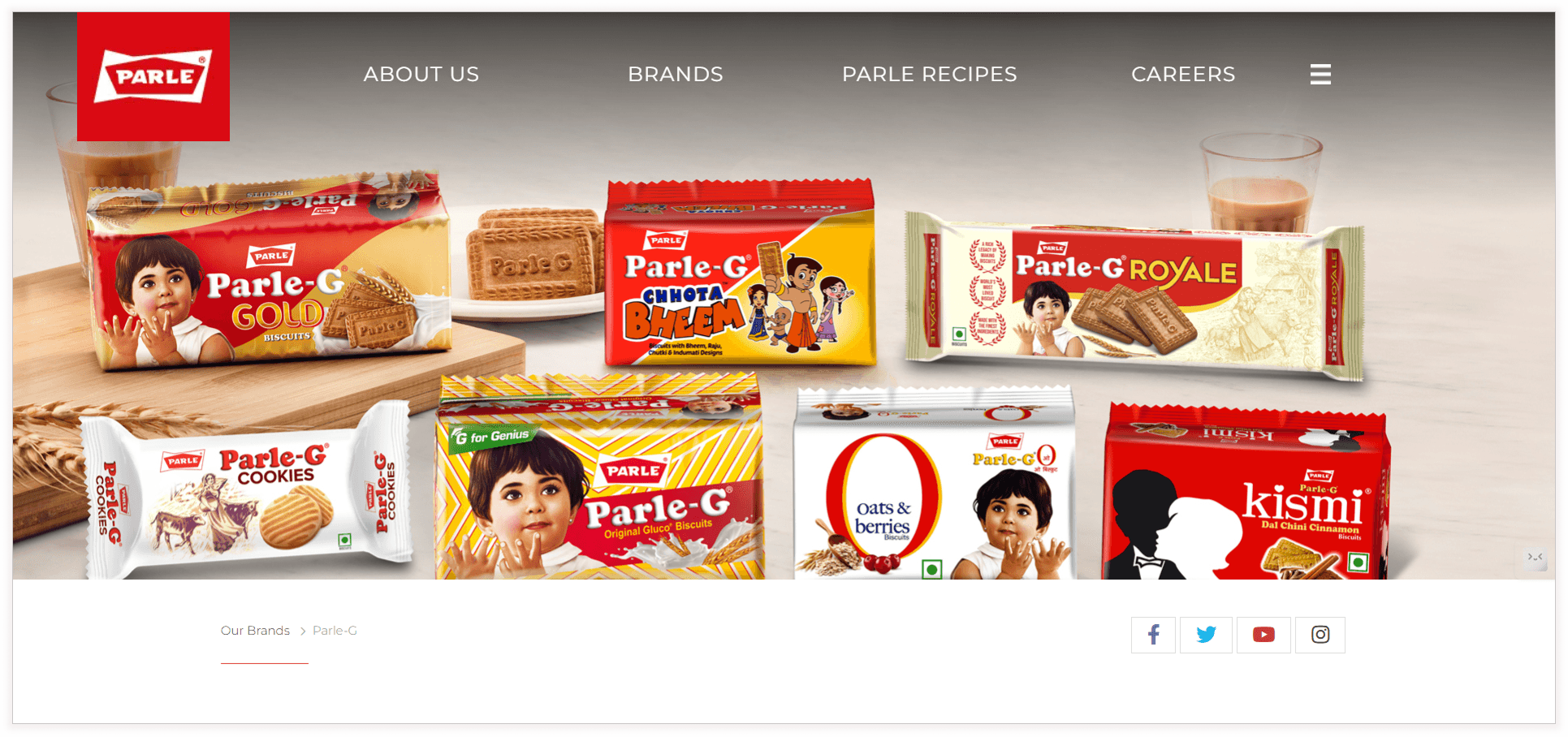
In the 1930s, the Swadeshi movement was in full swing, and the Indian boycott of British goods was intense. Mohanlal Dayal Chauhan, a candy manufacturer and a strong believer in the Swadeshi cause, had the vision to bring an affordable Indian snack to the people. He pioneered a biscuit called Parle Gluco.
At the time, the market was dominated by expensive, imported biscuits from brands like Britannia and United Biscuits. To offer a local and affordable alternative, Mohanlal launched Parle Gluco biscuits at just 5 paise. It was a breakthrough, affordable, high-energy, and accessible.
In the 1970s, Parle Gluco biscuits were distributed to Indian soldiers, which boosted their popularity and sales. Around the same time, many brands started copying the product. To stand out, the name was changed to Parle-G, and the now-iconic image of the baby girl was added to the packaging. Even after decades, the design remains unchanged.
Even after 85 years, Parle-G remains a household name.
- Every day, over 40 crore biscuits are manufactured.
- Every year, they produce 1.2 million metric tons of biscuits.
- In FY2024, Parle's profit jumped twofold to ₹1607 crore.
Parle-G is not merely a biscuit. It’s an emotional connection, a piece of our childhood. Back in school, when money was limited, this was the biscuit we bought and shared with friends. Even today, though we can afford more expensive options, we often choose Parle-G because it reminds us of simpler times and cherished memories.
Conclusion
Branding is the tonality and identity of your business. Executing a deep, breakthrough branding process creates emotional connections and helps your brand stand out in a crowded market. But branding doesn't stop after the initial launch. Regular brand audits ensure that your messaging remains consistent, your visuals align with your values, and your audience stays engaged.
In due course, branding is a continuous process, not just about delivering countless advertisements or listing features but about demonstrating the benefits of your products, why customers use them, and how they solve their pain points.
Once you start to act on behalf of your customers, you begin to understand their needs and preferences and provide products and services that align with them. Regularly review your branding process if it lacks coherence, research the gaps, and make changes. Moreover, staying relevant, authentic, and aligned with your values and brand pillars is key. Branding is an intangible asset that drives recognition, loyalty, and long-term success for your business.