Table of contents:
-
What is the ecommerce chatbot? -
What are the types of ecommerce chatbots? -
Why Your Ecommerce Store Needs Chatbots? -
Making move to lifting your growth
Having a responder with a thorough understanding of the finer details about the physical store and aware of the expectations of your audience, allows you to offer solutions that meet their needs, thereby fostering a healthy relationship with them. However, assisting your audience in an ecommerce is often more complicated and it is difficult to pay close attention to every customer's question and even harder to deliver immediate answers to everyone, which tends to result in there being no buying process, leaving with pessimistic comments and a stagnant market position.
According to a report by Wifitalents, 85% of customer interactions are now managed without human agents due to automation, and approximately two-thirds of consumers have used a chatbot for customer service.
As a result, you must strive to create an indispensable environment that supports your audience throughout their buying journey. By rolling out chatbots in your ecommerce store to act as digital executives, you can guide customers toward a purchase while ensuring their expectations are met.
Incorporating chatbots into your store allows you to track customer movements and understand their behaviour. There is no longer a need to make your team available for simple queries; instead, you can redirect your audience toward your offers, preventing them from being trapped in endless chaos. Yet there are nuances to chatbots that go beyond mere instant replies. Let’s figure out those that strengthen the position of your store.
What is the ecommerce chatbot?
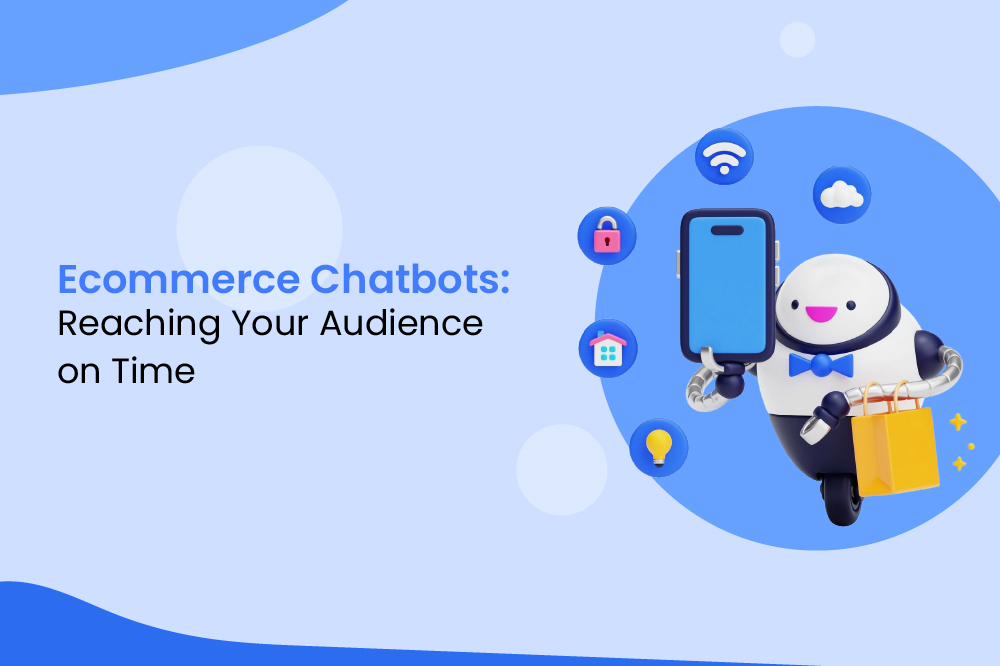
An ecommerce chatbot is a computer program designed to engage in real-time conversations with users. It guides them toward answers to their queries and assists with product recommendations, feedback gathering, and engagement tracking, helping them leave with relief instead of frustration.
What are the types of ecommerce chatbots?
Picking ecommerce chatbots relies on your offerings, as well as the supportive services you put in place for your audience, which tend to connect with them and help them get out of the potholes.
Rule-Based Chatbots:
Rule-based chatbots respond using predefined comments or options. Since you don’t always know whether a visitor is new, regular, or seasonal, it’s better to provide generic options that users can select according to their needs, within set boundaries.
AI-Powered Chatbots:
AI-powered chatbots respond based on user intent, analysing their queries and providing answers that are relevant to them. For this, users can raise their inconveniences about their orders, difficulties with the checkout process, product availability, or promotional campaigns, which help your audience convey their state to you.
Hybrid Chatbots:
Beyond automation, there is still a need for humans to handle certain queries. At that time, hybrid chatbot mode enables the transfer of queries to the respective person, ensuring that users get accurate information instead of repeated messages while providing a solution.
Why Your Ecommerce Store Needs Chatbots?
Chatbots are a touchpoint your customers want to have a conversation with you through. As a store owner, you don’t limit yourself to merely making quality offerings and delivering them; besides, there are a bunch of responsibilities to make your audience happy to buy from you, rather than fancy campaigns.
Understanding your customers:
Responses decide whether customers stay with you or leave, even though you provide perfect offerings to them. Because you are more than your offerings, there are intangible deeds you do for them. Before providing common comments, put your ears to their queries and present personalised solutions to them, which tend to make them feel special and keep purchasing from you.
Leveraging opportunities:
Your customers are scattered across the internet on different platforms, and there is no assurance that they will raise their queries through your website. For this, you can try to engage with your customers on Facebook, Instagram, WhatsApp, YouTube, and LinkedIn to become aware of their situations and address them with relevant solutions. This makes you more familiar to non-audience and helps you receive opportunities to present your offerings to them.
Making a Move to Lift Your Growth:
Chatbots are reminders that alert you to what is going on in your store and with your customers, which leads to knowing the buying patterns of your customers, tracking their actions on your store, and understanding what your customers want, while also identifying weaker spots that help you put an end to them and strengthen your store. Eventually, you end up avoiding the improper allocation of resources and implementing them better.