Drawing Visitors to Your Online Store Without Draining Your Budget
In the competitive world of ecommerce, attracting visitors to your online store is essential for success. While paid advertising and marketing campaigns can be effective, they can also be costly. A more budget-friendly and sustainable approach is to harness the power of ecommerce SEO (search engine optimization).
Ecommerce SEO involves optimizing your online store to rank higher in search engine results pages (SERPs). This means that when potential customers search for products or services related to your offerings, your store is more likely to appear prominently in their search results.
Achieve cost-effective online visibility by ranking higher in SERPs, attracting organic visitors without click expenses. Rely on SEO to decrease dependence on paid advertising, resulting in long-term cost savings.
Begin your online selling journey now with ZenBasket
Storeadmin
Contents Outline:
- Define ecommerce SEO
- What steps are involved in formulating an ecommerce SEO strategy?
- What are the most effective tools for ecommerce SEO?
Define ecommerce SEO:
Ecommerce SEO, or search engine optimization, involves enhancing the visibility of your digital store in online search results, drawing in more visitors without resorting to paid advertisements.
A successful ecommerce SEO strategy aims to place your store and product pages prominently on a search engine results page (SERP) when potential customers are searching for products similar to yours.
Crafting SEO marketing is a key component of ecommerce SEO. This improves websites for top search engines like Google, making them more visible online. For example, an ecommerce store like BigBasket, which sells grocery items, can enhance the SEO of its website by creating content about The Science Behind Soaking Nuts & Seeds - Bigbasket Lifestyle Blog
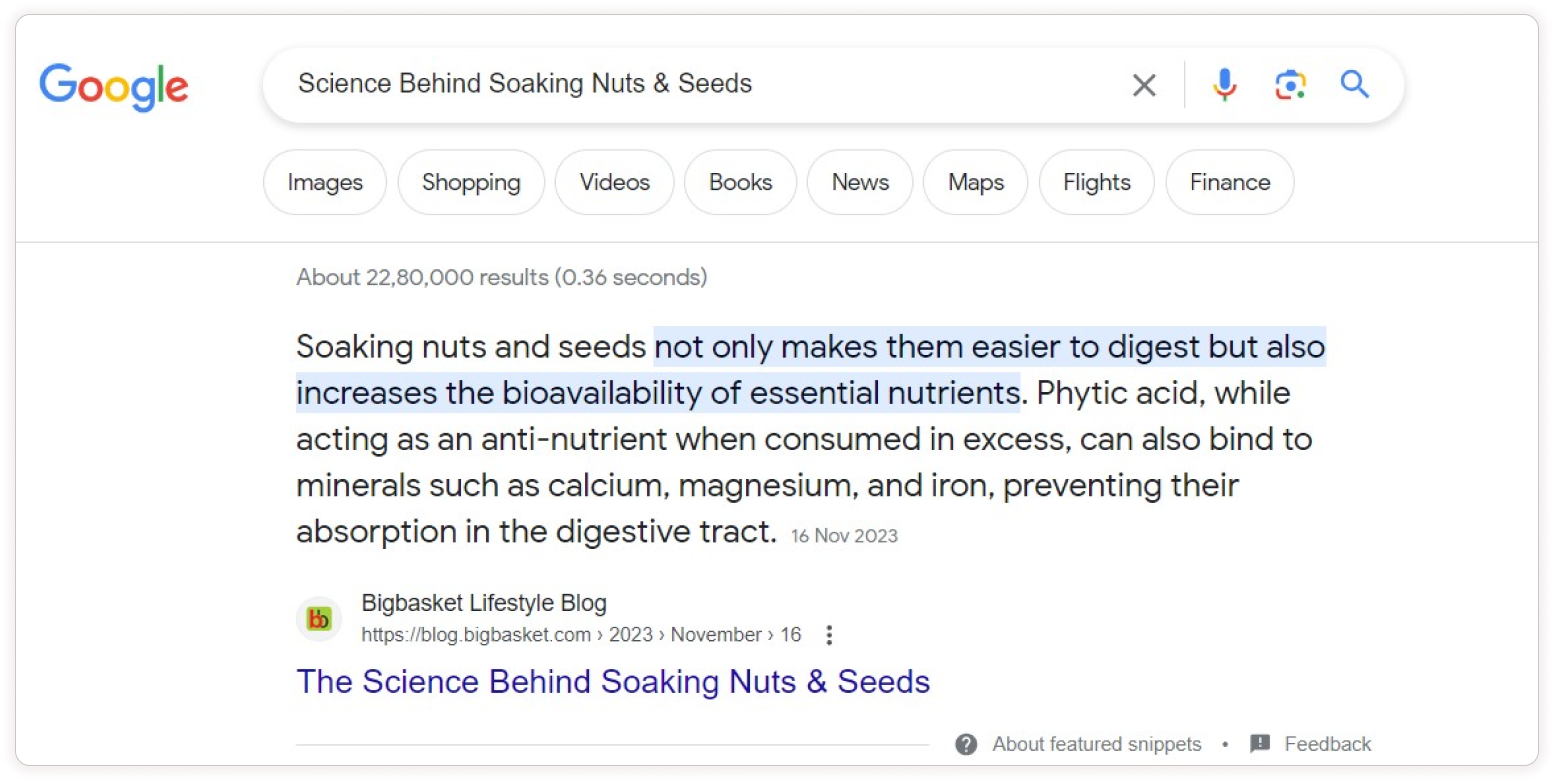
Additional activities in ecommerce SEO include enhancing page loading speeds, crafting detailed product descriptions, and securing links from authoritative websites. Ecommerce websites leverage SEO as a strategy to drive increased traffic, drawing visitors searching for products and brands related to their offerings.
What makes SEO important for ecommerce websites?
When searching on Google, the search engine presents results related to your query, typically displaying around 10 results.
For example, when you search for "Footwear" Google shows two popular and top ecommerce platforms, Myntra and Zouk, as organic results, indicating the absence of paid ads or promotions.
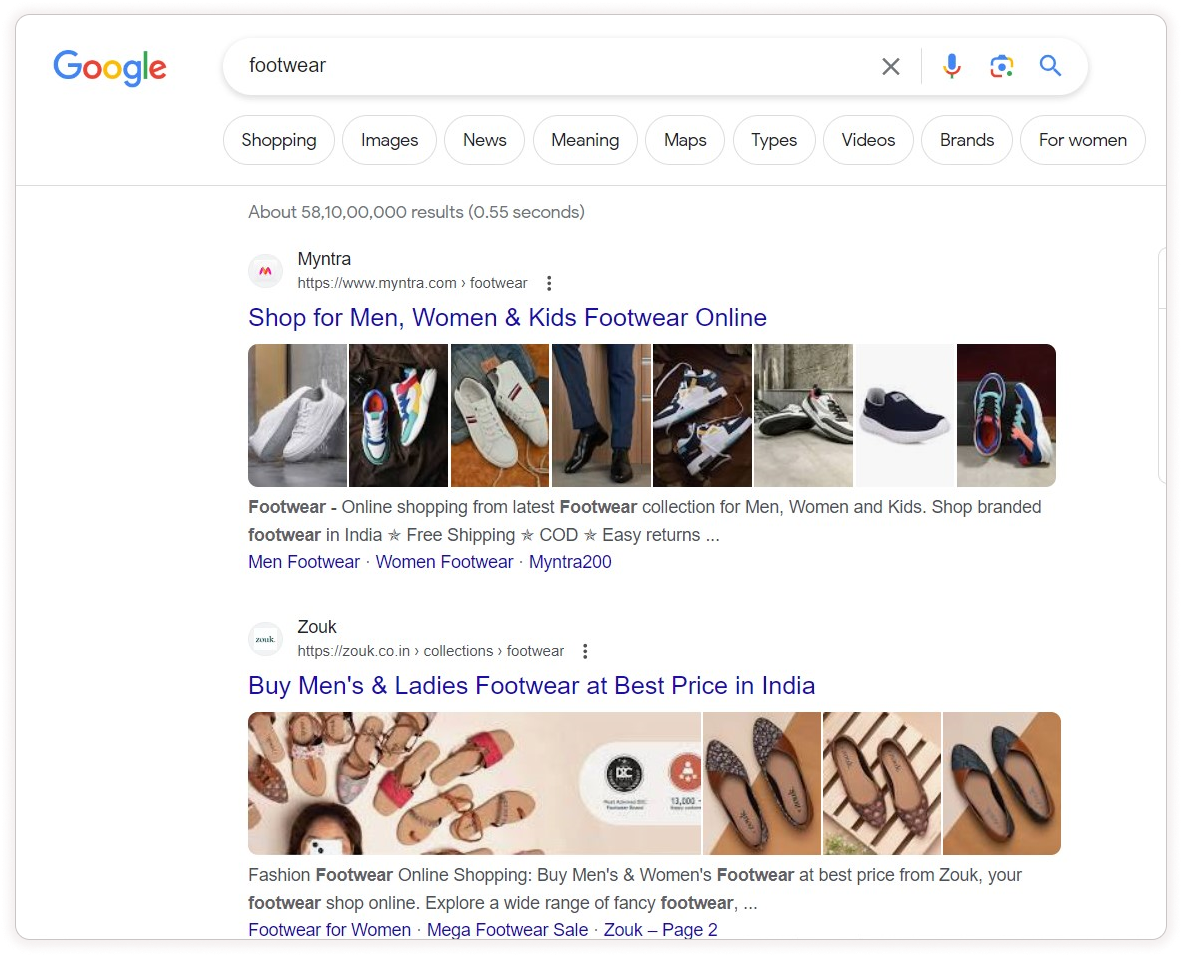
Ecommerce SEO is about making sure your product pages show up at the top when people search on Google. If your website isn't in the top 10 results, it's not likely to get many visitors. Even websites in positions three to five get much less traffic than those at the very top.
Myntra:
- Extensive range of footwear from diverse brands.
- Detailed product descriptions aid informed decisions.
- High-resolution images for visual product assessment.
- User-friendly website with easy navigation and effective categorization.
Zouk:
- Strategic use of keywords in titles, descriptions, and content.
- Actively builds backlinks for enhanced website authority.
- Utilizes influencer marketing for brand awareness and organic traffic.
- Maintains an active social media presence for engagement and showcasing products.
Benefits for Customers:
- Increased product options through enhanced discovery.
- Comprehensive product information for informed decisions.
- Improved user experience with user-friendly websites.
- Personalized product recommendations based on search and browsing history.
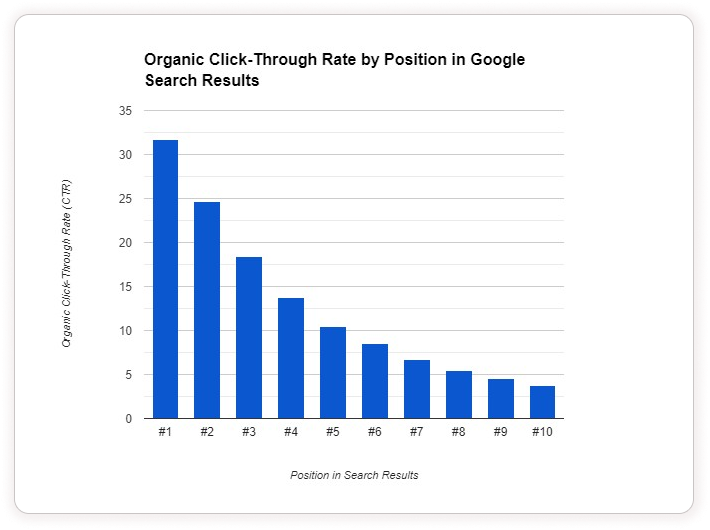
From this graph, we clearly understand that positioning our website in Google Search Results helps reach a larger audience. Customers are less likely to scroll down to visit results beyond the top 10 in a Google search.
What steps are involved in formulating an ecommerce SEO strategy?
If you're new to the world of search engine optimization (SEO) and are eager to boost your store's visibility on Google, follow these steps. They provide actionable insights for establishing a solid SEO foundation for your ecommerce website.
1. Finding Relevant Keywords for Ecommerce:
Ecommerce websites stand out from other online platforms due to the heightened importance of comprehensive keyword research. It's all about finding the words people use when they're ready to buy something. Your goal is to rank high in these searches and make your online store the top choice for great shopping experiences.
.png)
While informational keyword searchers seek answers, guides, and explanations, ecommerce businesses must also cater to users with buying intent. This creates a delicate balance between informative content and keywords that signal purchase readiness.
Blogs and content-heavy sites thrive on informational keywords. Articles, guides, and FAQs attract readers seeking knowledge and understanding. Shopify stores and other ecommerce platforms, while incorporating informative content through blogs, prioritize transactional keywords like "best running shoes for women" These keywords demonstrate clear buying intent, indicating the user is further along the purchase journey.
Amazon and Google Autocomplete: Unveiling Keyword Treasures
As you begin typing a search query into Google, the autocomplete feature offers relevant suggestions.
These suggestions serve as a valuable resource for generating keyword ideas, particularly when you already have some basic keywords in mind.
.png)
Make sure to also explore the related search queries at the bottom of the Search Engine Results Page (SERP) for additional insights.
Performing a similar procedure on Amazon can yield fruitful results. The noteworthy aspect of Amazon's suggestions is their product-centric focus, offering filterable details such as price, setting them apart from Google.
It's essential to be mindful of long-tail keywords, which are more extended and provide detailed descriptions of specific items. The longer the keyword, the more precise it becomes. This often translates to lower competition and higher conversion rates.
.png)
Take a closer look at how Amazon, as well as other major ecommerce platforms, structures content for improved visibility in search results. Explore relevant product menus to gather ideas for keyword categories.
.png)
"For instance, if your business involves selling handmade jewelry items, locate that category on Amazon. By doing so, you can observe the various ways Amazon arranges and organizes products within that niche."
Keyword Research Tools:
Keyword research is a fundamental pillar for any successful ecommerce strategy. By identifying the right keywords, you can attract targeted traffic, improve organic search ranking, and ultimately boost your sales. Fortunately, numerous keyword research tools are available to equip you with the necessary insights and data.
Here are some of the most popular and effective keyword research tools:
Free Tools:
Google Keyword Planner: This free tool offered by Google provides search volume data and competition levels for keywords. While primarily used for paid advertising, it offers valuable insights for organic SEO as well.
Keyword Tool: This freemium tool offers keyword suggestions based on Google Autocomplete, helping you discover long-tail keywords and related search queries.
AnswerThePublic: This unique tool displays keyword data in a visual format, providing insights into user intent and question-based search queries.
Paid Tools:
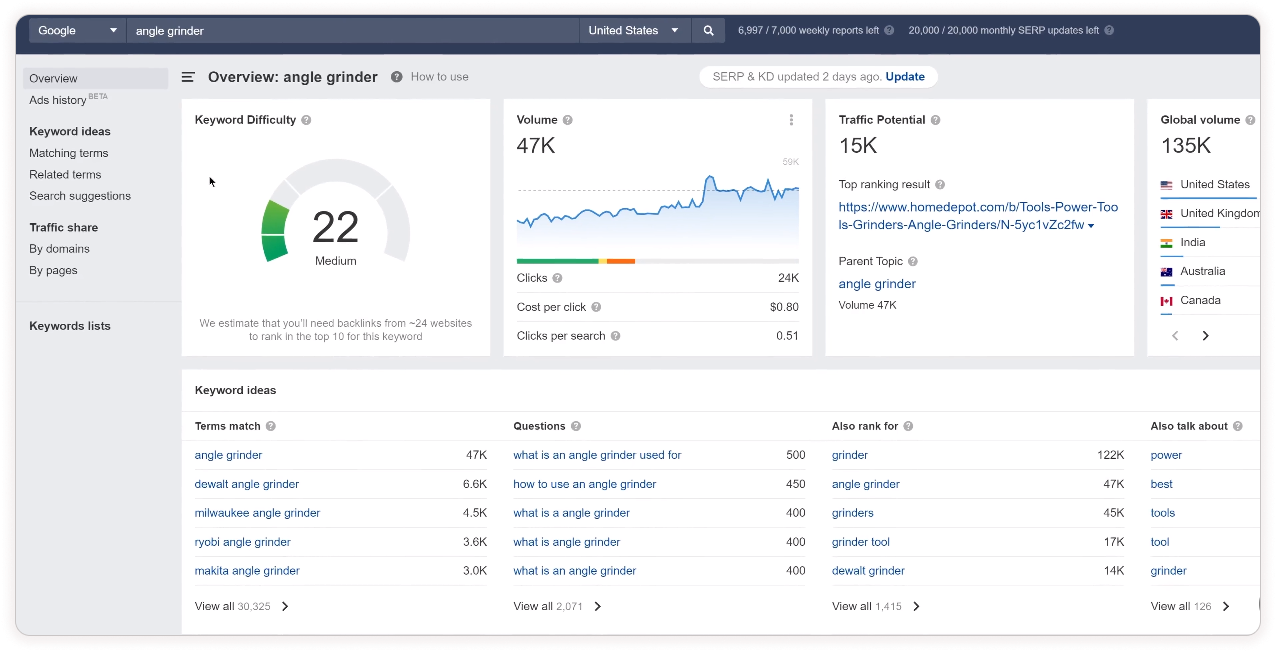
Ahrefs: This powerful tool offers a comprehensive suite of keyword research features, including keyword difficulty scores, backlink analysis, and content gap analysis.
SEMrush: Similar to Ahrefs, SEMrush provides a wide range of keyword research tools, including keyword tracking, keyword magic tools, and topic research.
Moz: This established tool offers keyword research features alongside other SEO insights, including link analysis, on-page optimization suggestions, and website audits.
How to choose the right keywords:
Optimize SEO with precision. Focus on key elements like search volume, competition, relevancy, and cost per click to boost visibility and attract buyers.
i) Search volume: Use reliable keyword research tools to identify keywords with a decent monthly search volume relevant to your industry.
ii) Competition: Aim for keywords with moderate competition levels. This sweet spot ensures you can achieve good rankings without facing overwhelming competition.
iii) Relevancy: Choose keywords that directly relate to your available products and categories. This ensures potential buyers find exactly what they're looking for when they land on your website.
iv) Cost Per Click (CPC): While not always an exact indicator, a higher CPC can suggest stronger commercial intent behind the keyword, indicating users are closer to making a purchase.
2. Structuring an Ecommerce Site:
Structuring an ecommerce site is the backbone of your online store. It encompasses both the back-end and front-end of your website. It dictates the technology that powers your store, the way data is stored and accessed, and the user experience your customers encounter.
Simple and Scalable Structure: As your product catalog grows, maintaining a simple and scalable site structure becomes crucial. This ensures ease of navigation for users and search engine bots, even with expanding content.
Reachability Within Clicks: Every page on your site should be accessible within a few intuitive clicks. This prevents users from getting lost in a maze of pages and relying on the back button to find what they need.
Simplicity Reigns Supreme: Avoid overly complex structures that require frequent reorganization with every new product category. Keep it simple and intuitive for both users and your website management.
SEO Authority and Link Power: Your homepage carries the most SEO link authority, as it's the most common landing page for external links. The further a product page is from the homepage, the less authority it possesses.
Page Indexing:
Page indexing refers to the process by which search engines like Google discover, crawl, and store information from your website's pages in their database. Once indexed, your pages become eligible to appear in search results when users search for relevant keywords.
Why Does Ecommerce Rely on Page Indexing?
i) Increased Visibility:
- Proper indexing boosts the chances of appearing in SERPs.
- Attracts more potential customers and increases website traffic.
ii) Improved User Experience:
- Swift and easy navigation on a well-indexed website.
- Enhances user experience, encouraging longer stays and more product exploration.
iii) Enhanced SEO:
- Proper indexing allows optimization for specific keywords.
- Achieves higher rankings, driving organic traffic and increasing conversions.
Breadcrumbs:
Breadcrumbs serve as a secondary navigation tool on websites, helping users understand their location within a website or application. They're like a little map, showing you where you are on the website. You can use them to easily go back to previous pages or find your way around different sections.
i) Easy Navigation:
- Follow the clear trail with Breadcrumbs.
- Easily go back or jump between categories.
ii) No More Confusion:
- Stay on track and avoid getting lost.
- Understand where you are on the website.
iii) User-Friendly and SEO Boost:
- Browse and compare products easily.
- Enjoy a better website experience and improve search engine results.
For Example, in Max Fashion, a product page might show a breadcrumb trail like "Home > Women > Dresses and Jumpsuits > Dresses>".
.png)
3. Technical SEO:
Technical SEO refers to the practice of optimizing a website to meet the technical requirements and standards set by modern search engines. The primary objective is to enhance the website's organic search rankings. Essential elements of technical SEO include activities such as crawling, indexing, rendering, and optimizing website architecture.
Technical SEO results in:
- Improved website engagement through swift and accessible site navigation.
- Increased organic traffic due to enhanced crawlability and accessibility.
Key strategies to improve your ecommerce website's technical SEO:
i) Help Search Engines Explore Your Site:
- Share a map (Sitemap) of your site content.
- Control which pages can be seen by search engines (Robots.txt).
- Keep an eye out for any issues regularly.
ii) Make Your Site Faster:
- Use a Content Delivery Network for quicker loading everywhere.
- Shrink image sizes without losing quality.
- Let browsers save some parts of your site to make it load faster when someone comes back.
iii) Mobile-Friendly and Easy to Use:
- Make sure your site works well on different devices.
- Add extra details for mobile search results.
- Create a site that's easy to use and understand.
iv) Give More Info to Search Engines:
- Share extra details about your products for better search results.
- Structure your site information in a way that search engines like.
v) Connect Your Pages and Make Them Easy to Find:
- Organize your site so it's easy for people and search engines.
- Link related pages for better overall performance.
- Use breadcrumbs to show where you are on the site.
4. On-page SEO for Ecommerce:
On-page SEO for e-commerce involves optimizing specific elements within an online store, such as product descriptions, meta tags, and images. The goal is to improve the website's visibility in search engine results, making it more user-friendly and appealing to both search engines and potential customers.
Ecommerce Content Basis:
Ecommerce Content Basis encompasses essential elements for effective online selling, from engaging product descriptions to SEO optimization. It involves creating appealing content that caters to the target audience, utilizes relevant keywords, and enhances the overall visibility of the ecommerce website for optimal customer conversion.
Ecommerce Product Description:
An ecommerce product description is a vital piece of marketing copy that appears on a product page.
i) To describe the product: It provides essential information about the product, such as its features, specifications, materials, and uses. This helps potential customers understand what the product is and how it works.
ii) To persuade the customer to buy: It highlights the benefits of the product and explains how it can solve the customer's problems or improve their lives. This motivates the customer to add the product to their cart and complete the purchase.
Latent Semantic Indexing:
Latent Semantic Indexing (LSI) is a technique used by search engines to understand the context and relationships between words in a document. It enhances search accuracy by considering the broader meaning and relevance of terms beyond their literal interpretation.
LSI Benefits for Ecommerce SEO:
i) More Relevant Content:
- Find words related to your main ones.
- Tell search engines your content is really about the topic.
- Helps your site show up for more searches.
ii) Better for Users:
- Use words that fit naturally in your writing.
- Makes people stay on your site longer and like it more.
iii) Targets Specific Keywords:
- Find words that are specific and not too competitive.
- Brings in people who are more likely to buy your stuff.
iv) No More Overusing Keywords:
- Encourages using many different but related words.
- Keeps your site from looking spammy and helps it rank better.
v) Get New Ideas for Content:
- Shows you new things to write about.
- Helps your site reach more people and get more customers.
Ways to Boost Ecommerce SEO with LSI:
- Use LSI keywords in your product descriptions, titles, and meta descriptions.
- Create blog posts and articles that target LSI keywords.
- Use internal linking to connect your product pages with related content.
- Monitor your website's performance and adjust your LSI strategy as needed.
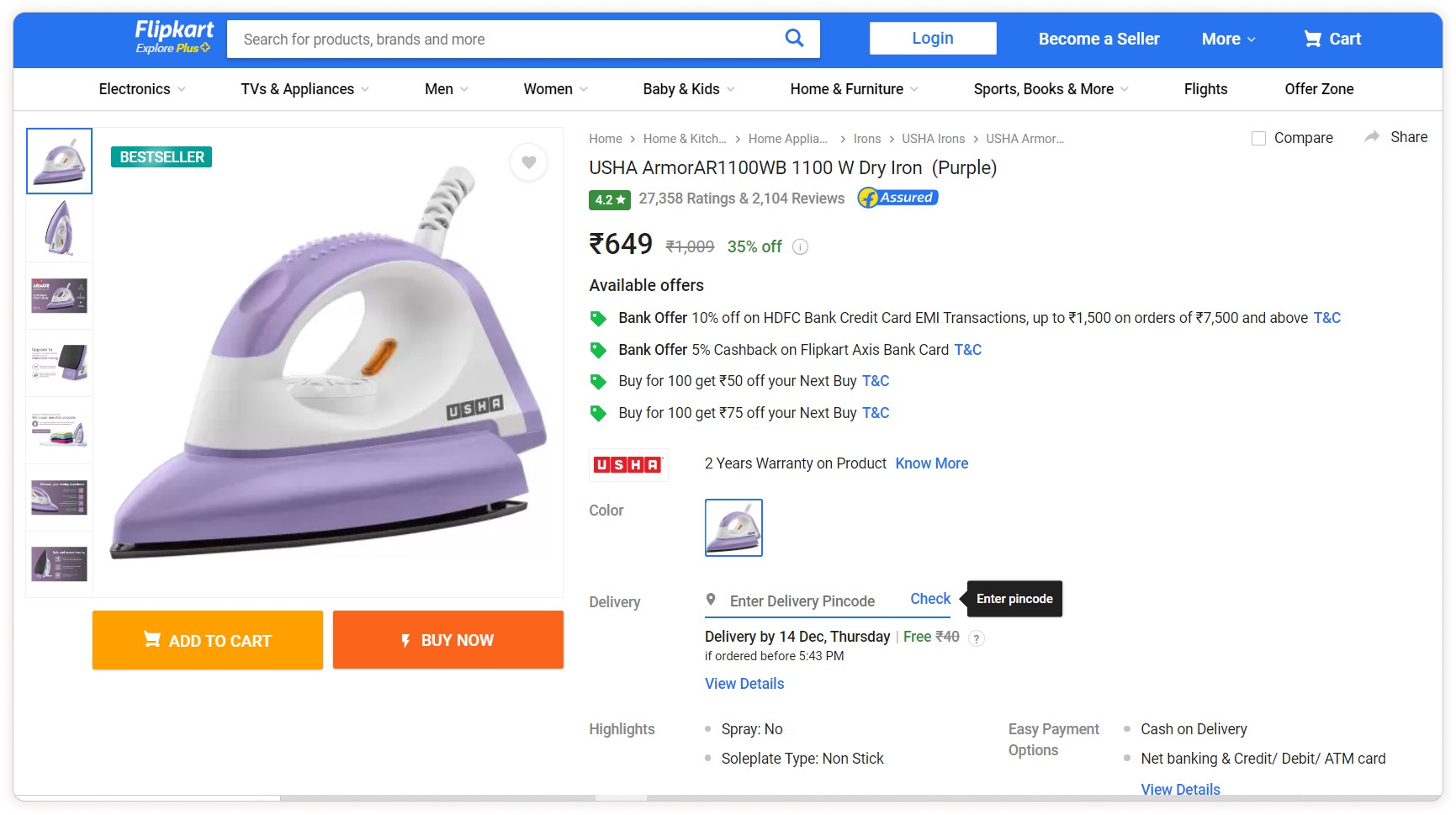
Internal Links: Keep Visitors Engaged
Capture and retain visitor attention by adding strategic internal links to your website. By seamlessly guiding them to relevant pages, you can boost product discovery, enhance user experience, and ultimately increase sales.
How internal linking can benefit your ecommerce:
i) Prolonged Visitor Engagement:
- Internal links guide users to explore related content and products.
- Increases the likelihood of conversions.
ii) SEO Improvement:
- Search engines favor well-structured internal linking.
- Distributes page authority and relevance, enhancing overall SEO performance.
iii) Enhanced User Experience:
- Facilitates smoother navigation with relevant information.
- Contributes to a more enjoyable and satisfying shopping experience.
Some impactful ways to use internal linking on your ecommerce website:
i) Product pages: Link to related products based on compatibility, category, or similar features.
ii) Category pages: Connect users to subcategories or specific products within the broader category.
iii) Educational content: Link to blog posts, articles, or other resources that provide further information about the product or its benefits.
5. Blogging:
Blogging is the creation and regular updating of an online platform called a blog. It involves sharing information, opinions, or experiences through written entries known as posts. Blogs can cover diverse topics, serve various purposes, and often include multimedia elements to engage readers.
Crafted Blog Benefits:
i) Build Brand Authority: Share valuable insights and expertise, establishing yourself as a trusted resource in your niche.
ii) Boost Organic Search Visibility: Targeted keyword integration and optimized content improve your website's ranking for relevant search queries.
iii) Attract and Engage Customers: Offer informative and engaging content that resonates with your audience, building trust and loyalty.
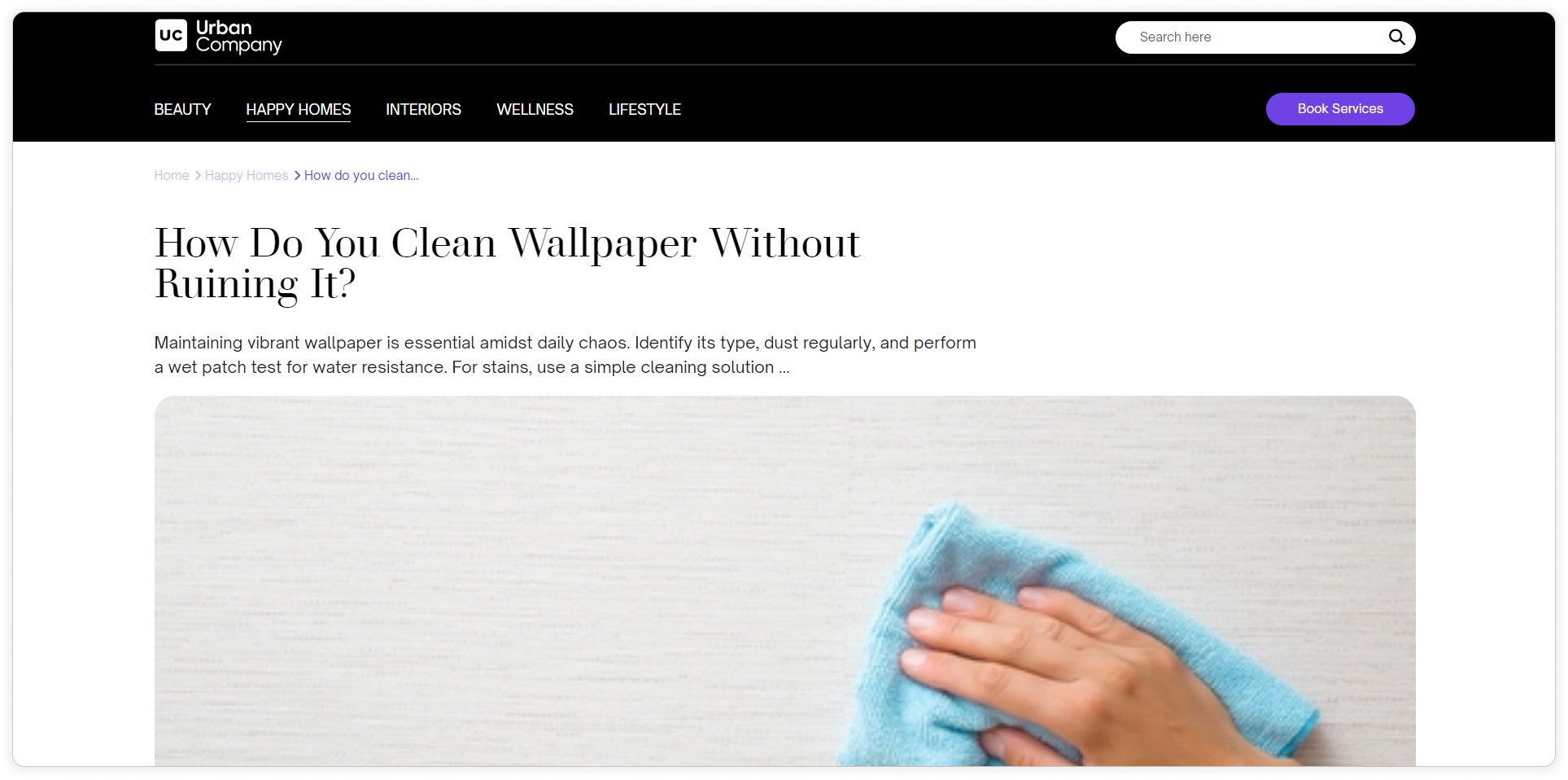
Several ecommerce businesses successfully integrate blogging into their strategies. For example, Urban Company stands out by providing doorstep services such as cleaning, pest control, and home repairs. Complementing its services, the brand maintains a blog featuring articles like How do you clean wallpaper without ruining it? - The Urban Life. It helps the readers learn how to maintain the quality of wallpaper.
Key Elements for Ecommerce Blog SEO Success:
Building a successful ecommerce blog starts with understanding user intent and optimizing your content for search engines.
i) Keyword Research:
- Identify relevant keywords using tools like Google Search Console and Ahrefs.
- Target specific keywords for each post to enhance SEO.
ii) Content Optimization:
- Craft informative content addressing audience needs with relevant keywords.
- Implement on-page SEO practices for better search engine ranking.
iii) Seamless Product Integration:
- Present products as solutions to audience problems.
- Strategically link to product pages within blog posts for increased visibility and conversions.
By focusing on these three key elements, you can create a blog that attracts organic traffic, boosts your ecommerce SEO, and drives sales for your online store.
6. Link Building:
Link building is the process of acquiring hyperlinks from other websites to your own. These links act like votes of confidence, indicating to search engines that your website is trustworthy and relevant to specific search queries. The more high-quality backlinks you have, the higher your website will rank in search results, leading to increased organic traffic and visibility.
Impact on SEO:
i) PageRank: Google's algorithm relies heavily on PageRank, which considers the number, quality, and relevancy of a page's backlinks to determine its authority and ranking.
ii) Trustworthiness: Backlinks signal to search engines that other websites consider your content valuable and trustworthy, boosting your overall website credibility.
iii) Improved visibility: Higher rankings in search results translate to increased organic traffic and brand awareness.
Optimize Ecommerce Link Building:
i) Building Partnerships:
- Focus on value creation: Identify opportunities to create content valuable for other websites within your niche. This could include informative articles, infographics, or research studies. When you offer something worthwhile, other sites are more likely to cite your work with a backlink.
ii) Guest Posting:
- Target relevant websites: Conduct keyword research and analyze backlinks to identify reputable websites within your niche open to guest contributions. Create high-quality content tailored to their audience and interests to increase your chances of publication and a valuable backlink.
iii) Leveraging Press Mentions:
- Get noticed by the media: Register for platforms like Help A Reporter Out (HARO) or Help a B2B Writer to receive daily emails with journalist inquiries. When a query aligns with your brand, reach out with a compelling pitch and, if successful, secure a link back to your website.
7. Ecommerce SEO Tools:
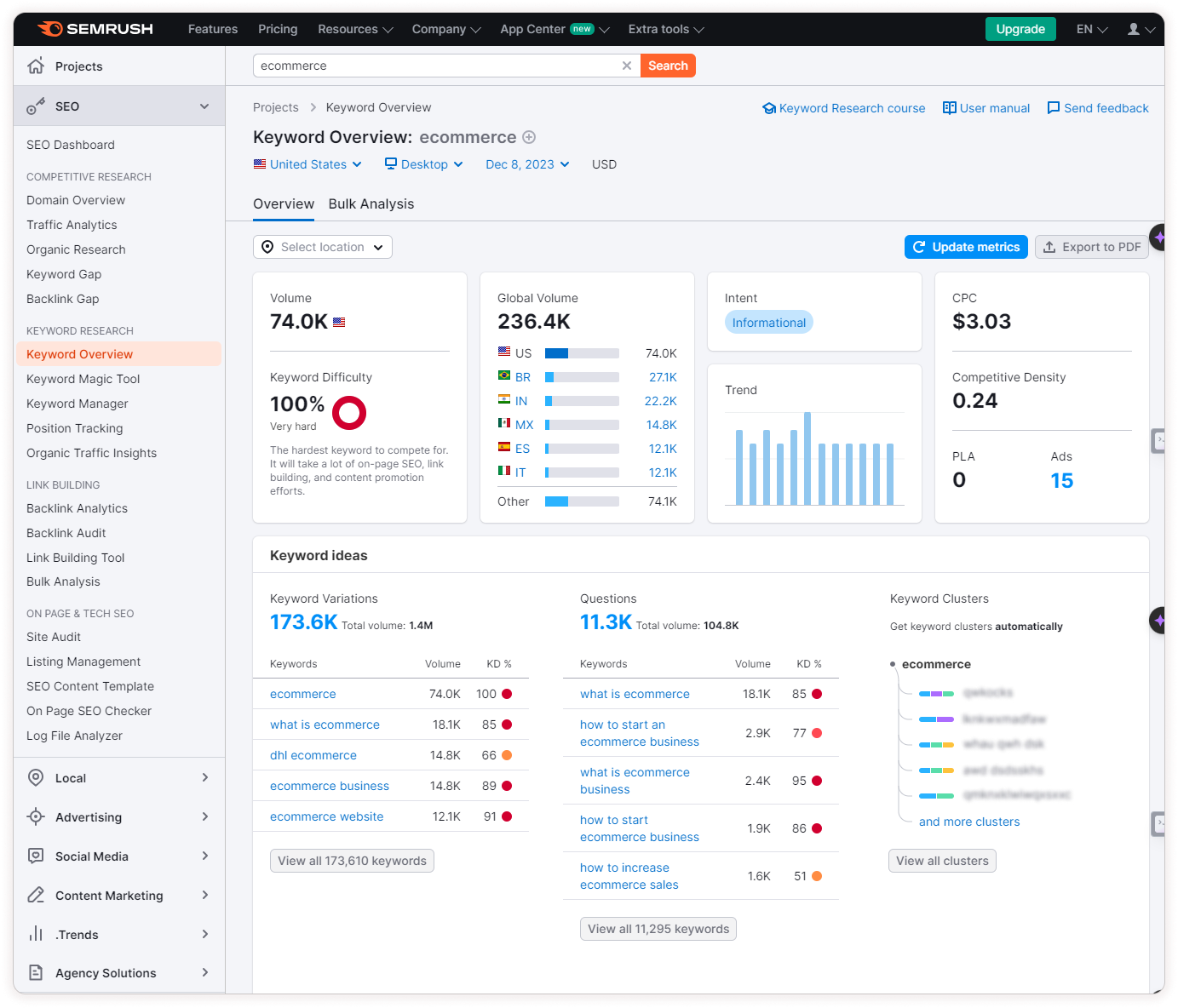
i) SEMrush:
SEMrush, a widely used online marketing platform, offers tools and services for search engine optimization (SEO), pay-per-click (PPC) advertising, content marketing, and competitive analysis.
- SEO: Keyword research, competitor analysis, backlink tracking, site audits, and more.
- PPC: Campaign management, keyword research, ad copy suggestions, competitor analysis, and more.
- Content Marketing: Topic research, content calendar planning, content optimization suggestions, and more.
- Social Media Marketing: Social media scheduling, competitor analysis, performance tracking, and more.
- Competitive Research: Uncover your competitors' strategies, track their performance, and identify opportunities to outperform them.
- Marketing Insights: Gain valuable insights into your target audience, industry trends, and market shifts.
- Campaign Management: Manage your entire digital marketing campaign from a single platform.
ii) Moz:
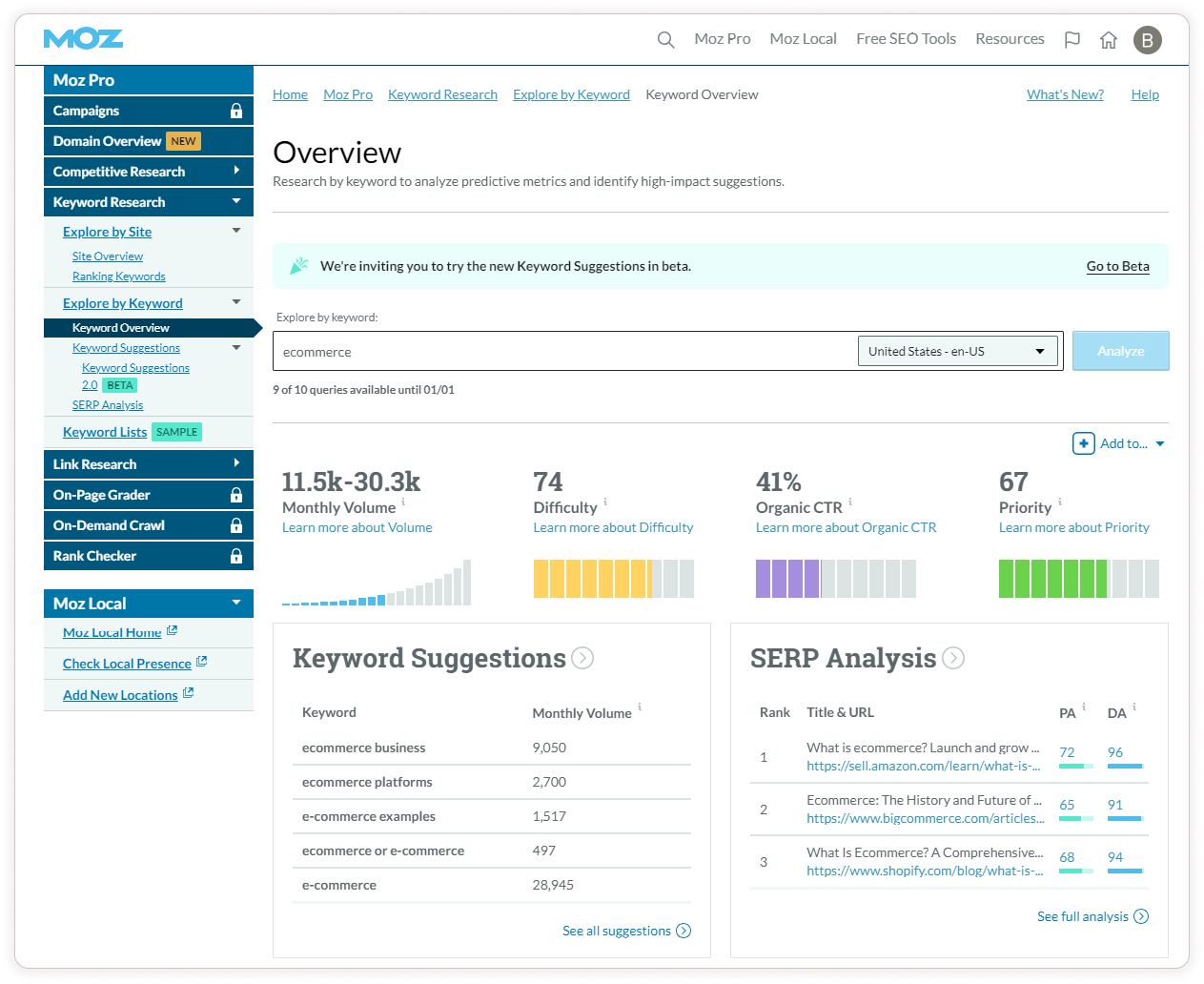
Moz is a comprehensive suite of SEO tools designed to help website owners and marketers improve their website's ranking in search engine results pages (SERPs). It offers a wide range of features and tools to help you with all aspects of SEO, including:
Keyword Research:
- Find high-volume, low-competition keywords relevant to your audience.
- Gain insights into keyword difficulty, search intent, and related keywords.
- Track keyword rankings and assess your website's performance against competitors.
Link Building:
- Discover quality websites for potential backlinks in your niche.
- Analyze and enhance your existing backlink profile.
- Monitor backlink growth and assess the impact of link-building efforts.
On-Page Optimization:
- Receive actionable recommendations for better search engine visibility.
- Identify and fix issues hindering higher search rankings.
- Track on-page optimization progress and overall improvement.
Competitor Analysis:
- Analyze competitors' SEO strategies for learning opportunities.
- Identify strengths and weaknesses to develop targeted tactics.
- Monitor changes in competitors' keyword rankings over time.
Website Ranking Tracking:
- Monitor website rankings for specific keywords and performance trends.
- Identify well-ranking keywords and areas for improvement.
- Track overall SEO performance and trending patterns.
iii) Google Analytics:
Google Analytics is a free web analytics service offered by Google that tracks and reports website traffic, mobile app traffic, and marketing campaign performance.
Keyword Research and Targeting:
- Identify high-value keywords for organic traffic and conversions.
- Track keyword rankings over time for optimization opportunities.
- Discover new keyword opportunities, including potential long-tail keywords.
Website Optimization and Content Performance:
- Identify low-performing pages with high bounce rates or low conversions.
- Understand user behavior and optimize the checkout process.
- Analyze individual product performance for better listings and merchandising.
Link Building and Backlink Analysis:
- Identify potential link-building opportunities through traffic and referrals.
- Track and monitor your website's backlink profile for quality links.
- Evaluate the impact of link-building efforts on organic traffic and rankings.
Campaign Analysis and Optimization:
- Track performance across marketing campaigns and channels.
- Measure ROI to demonstrate the value of your SEO strategy.
- Identify conversion pathways to optimize the marketing funnel for increased sales.
Conclusion:
Ecommerce SEO: A Continuous Journey
Ecommerce SEO is a dynamic process requiring consistent effort and adaptation. While rankings are never static, the six key steps outlined in this article provide a solid foundation to kickstart your online store's SEO journey.
Remember to prioritize originality and depth in your content, regularly audit your website for technical SEO issues, explore opportunities to build backlinks, and continuously research new keywords relevant to your brand and products. By embracing this ongoing approach, you can steadily improve your website's visibility and achieve long-term success in the ever-evolving world of ecommerce.