Imagine you constantly scrolling through gift options for your best friend's wedding. Nothing felt special enough. You wanted to present something unique to your friend, that would truly capture the years of your friendship.
After a couple of tries, you are frustrated, lean back, and your mind has an idea. You think, 'Why not create something personal?'. You remembered your inside jokes, the long conversation over chat, and the silly doodles you had drawn together during college. You clicked on a website offering personalized gifts and began designing a custom bracelet, added your favorite quote on the charm, and chose your friend's wedding date to be carved onto the clasp.
On the wedding day, your friend's eyes lit up as she unwrapped the small box. 'This is so us', she whispered, hugging you tightly.
You aren't just presenting the gift, you're presenting your whole life of friendship as a gift. They're not merely items: they're stories, memories, and emotions, all wrapped into one.
Through that, you create an emotional value beyond the material value, reflecting effort, care, and the special bond between the giver and receiver. It is one of the ways to express your emotions for your loved ones. It allows the giver to express thoughtfulness, care, and effort, making the recipient feel truly special.
Rising Demand for Unique Products
As the world shifts toward individuality, people no longer just want products, they want products that reflect their unique tastes, experiences, and personalities. People's prominent goal is to present themselves as unique and to create something that sets them apart from others. This desire for distinction leads to the demand for personalized and custom-made items.
In the traditional mass-produced product model, where everyone buys the same product off the shelf, items have started to feel impersonal and disconnected from the buyer's own identity.
For instance, a person who wants to present a bracelet to his wife as an expression of his love might find only fixed designs and quotes in the market. With no other options, he is forced to buy a product that doesn't feel personal or meaningful. While mass-produced products are convenient, they fail to go beyond functionality and fulfill the deeper emotional significance people are seeking in products.
This is where custom and personalized products come into play. Many new businesses emerge from solving this exact problem for customers. Their inconvenience transforms into innovative products and sparks new businesses in the market. Personalized products such as photo books, engraved accessories, or bespoke clothing cater to the desire for uniqueness.
Example: Etsy is a global platform where small businesses and creators offer personalized products like engraved jewelry, custom artwork, monogrammed bags, and unique handmade items. These include customized mugs, personalized wedding gifts, and hand-embroidered clothing.
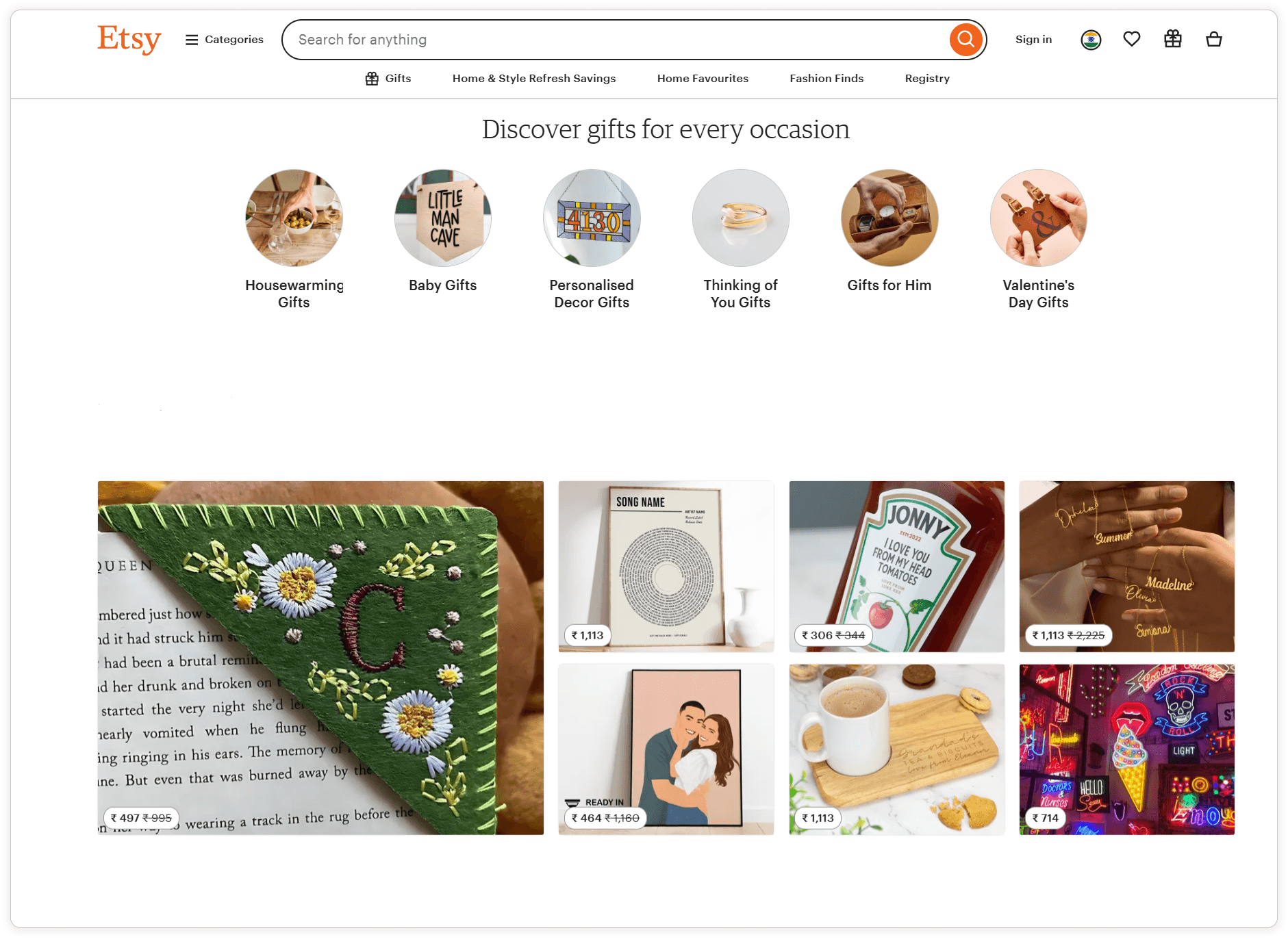
Through this, personalized products carry emotional weight, which is why they hold a unique place in the consumer market. Customers feel these items represent thoughtfulness, care, and effort, making the recipient feel valued and appreciated.
The rising demand for unique products shows that people now value the desire for individuality, personal touches, and emotional value in the things that they buy. This demand for unique items reshaping industries and pushing businesses to adopt customization and offer personalized options to their products to stay competitive in the market and retain the potential customer of their business
How Online Stores Can Cater to the Personalized Gift Trend
1. Offer Customization Tools
Online stores should provide user-friendly tools that allow customers to personalize their products easily and display live previews of customized products so customers can see how the final products will look before placing their order.
Example: When a customer buys a t-shirt, allow them to upload their picture onto the shirt, ensuring they receive a truly customized product.
2. Promote Trending Ideas
Highlighting popular gifting trends and offering pre-designed templates for various occasions can inspire customers to get creative.
Example: Offer a Valentine's Day special by providing custom templates for photo books or engraved lockets, which customers can personalize further to suit their needs.
3. Smoothing the Processes
Ensure the convenience of the customer while buying the product from your store. Provide step-by-step guidance on how to customize products. Use visuals or videos to make the process even easier.
Example: Personalized photo frames make the process easier by allowing users to drag and drop their photos and adjust layouts.
4. Highlight the Emotional Value
Through marketing campaigns and product descriptions, induce the emotional aspect of personalized gifts. Share relatable stories and testimonials about how personalized gifts have created lasting memories for other customers.
Example: Display the testimonials on your website to highlight how your personalized gift creates an emotional connection with customers.
Conclusion
As the demand for personalized products gradually rises, businesses have the opportunity to offer customization options that meet customers' unique needs. People want products with the emotional value behind the material value. When they buy something, they consider the product as a part of their life, not merely an item. Businesses that understand the emotional value behind these gifts can build stronger emotional connections with their products, easily positioning them to grab customers' attention in the market
With ZenBasket's easy-to-use personalization tools, store owners can offer unique, customizable items that foster emotional connections with customers. Customers can easily add images, creating meaningful connections that encourage repeat purchases and build stronger loyalty. Sell your products with emotional value and make every purchase feel personal and special with ZenBasket today.