A key yet often underestimated part of success lies in the website maintenance cost factor that directly influences the health and profitability of your online business. Maintenance ensures your site stays secure, fast, and user-friendly, which is crucial for keeping customers happy and your business growing.
However, for many business owners, these costs can add up quickly and become a big burden. High website maintenance costs can cut profits and make focusing on other parts of your business harder. In this blog, we'll break down what goes into website maintenance costs, share tips to lower expenses, and explain how ZenBasket offers an affordable way to manage your site without sacrificing quality. Let's explore how you can keep your website running smoothly while saving money.
How Much Does Website Maintenance Cost?
Understanding website maintenance costs is essential for any business, whether you're running a small online shop or managing an enterprise-level ecommerce business. The cost of maintaining a website can vary depending on several factors, including the size of your business, the complexity of your website, and the type of platform you use.
What Constitutes Website Maintenance?
Website maintenance encompasses a wide range of tasks designed to keep your website running smoothly, securely, and efficiently. These tasks not only maintain performance but also ensure your site remains relevant and compliant. These tasks typically include:
1. Hosting
- Robust hosting solutions are critical for handling high traffic, ensuring fast load times, and providing scalability.
- Costs vary depending on whether you opt for shared hosting, managed hosting services, or dedicated servers. Managed hosting often comes with higher fees but includes additional support and maintenance.
2. Security Monitoring
- Regular checks to protect your site from hackers and malware are essential.
- Security measures include SSL certificates, firewalls, malware scans, and audits to prevent data breaches.
3. Software Updates
- Keeping your CMS, plugins, and themes up-to-date is crucial for security, compatibility, and functionality.
- Delayed updates can lead to vulnerabilities, affecting the overall health of your website.
4. Content Updates
- Adding or editing product listings, blog posts, images, and promotional content keeps your website engaging and current.
- A well-maintained content management system (CMS) simplifies these updates but may require optimization over time.
5. Backup and Recovery
- Regular backups safeguard your data in case of technical issues or cyberattacks.
- A reliable backup solution ensures quick recovery with minimal downtime.
6. Performance Optimization
- Ensuring your website is fast, mobile-responsive, and user-friendly is critical.
- Tasks like image compression, code minification, caching, and using content delivery networks (CDNs) enhance performance.
7. Third-Party Integrations
- Integrating tools like enterprise resource planning (ERP), customer relationship management(CRM), product information management(PIM), or marketing platforms requires ongoing maintenance.
- Troubleshooting, API management, and data synchronization add to the complexity of website upkeep.
8. Compliance Requirements
- Adhering to standards like Payment Card Industry Data Security Standard(PCI DSS) and GDPR(for data privacy) is necessary for legal and operational security.
- Maintenance involves regular audits, assessments, and compliance monitoring to meet these regulations.
9. SEO and Strategic Initiatives
- Optimizing your website for search engines and maintaining ongoing SEO efforts ensure better visibility.
- Maintenance extends to email marketing, social media integration, and other strategies that boost traffic and conversions.
10. Payment Processing
- Payment gateways require regular updates to ensure compliance with security standards like the Payment
- Card Industry Data Security Standard(PCI DSS).
- Maintenance also involves troubleshooting transaction errors, updating API keys, and managing new payment options.
- Ensuring uninterrupted payment processing is crucial to avoid revenue losses.
These components contribute to the overall website maintenance cost and are crucial for providing a seamless experience to your customers.
How Much Does Web Maintenance Cost by Business Size?
The cost of website maintenance differs significantly based on the scale and needs of the business:
Small Businesses
For small ecommerce stores, the average website maintenance cost can range from $20 to $300 per month. Costs include basic updates, hosting fees, SSL certificates, and occasional professional assistance.
Medium-Sized Businesses
Medium-sized businesses may spend $300 to $1,000 per month on maintenance. This includes more advanced features such as custom integrations, enhanced security, and performance tracking. The need for external developers or IT professionals also adds to the cost.
Enterprise-Level Businesses
For large enterprises, website maintenance costs can exceed $1,000 per month and sometimes reach $5,000 or more. These businesses typically require advanced security measures, custom development, and dedicated IT teams. The complexity and traffic volume of enterprise websites drives up maintenance expenses significantly.
ZenBasket offers flexible monthly maintenance plans tailored to suit your business needs.
ZenBasket Maintenance Fee
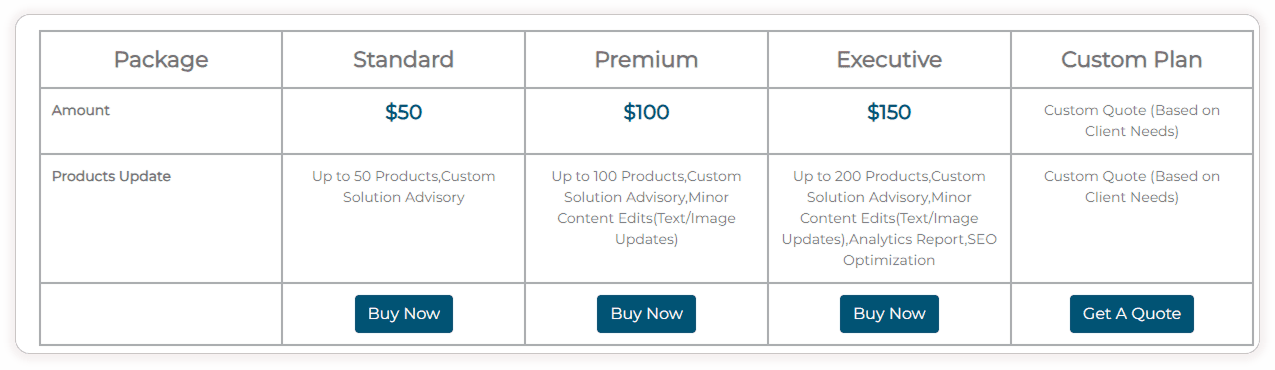
Get a Custom Plan designed to meet your specific business needs, offering services beyond the features included in the standard plans mentioned above.
Create Your Custom PlanSmart Ways to Reduce Website Maintenance Costs
Reducing website maintenance costs requires proactive measures and smart strategies that optimize efficiency and cut unnecessary spending. Here are some practical ways to achieve this:
- Evaluate and Streamline Operations: Regular audits can help identify inefficiencies and redundant tasks, allowing you to streamline workflows. Addressing bottlenecks, like technical glitches, improves customer experience and reduces ongoing costs.
- Focus on Prevention Over Reaction: Routine updates and scheduled maintenance catch potential issues early, preventing them from escalating into costly problems. Avoid the reactive approach, which might seem cheaper at first but often leads to higher expenses over time.
- Simplify Your Site: Reduce unnecessary add-ons or integrations that require frequent updates. A clean, well-structured website performs better and incurs lower maintenance costs.
- Optimize Inventory Management: Keep essential maintenance supplies and tools well-stocked without overcompensating. Proper planning prevents downtime while avoiding wastage or obsolescence from over-purchasing.
- Invest in Long-Term Protection: Extending warranties or insurance coverage for critical infrastructure safeguards your budget against unexpected repair costs and helps prevent disruptions.
Conclusion
Time is money, especially when it comes to website management. ZenBasket's intuitive design allows you to perform tasks like updates, content changes, and troubleshooting with ease. Unlike other platforms that may require frequent developer assistance or manual interventions, ZenBasket simplifies these processes, saving you both time and the associated costs of hiring external help.
With ZenBasket, maintaining your website becomes a streamlined, cost-efficient process. By choosing a platform that prioritizes simplicity and affordability, you can focus more on growing your business and less on managing your website maintenance cost.